
Content
DTF or sublimation: which one to choose for printing T-shirts
DTF prints on cotton and polyester, on light or dark garments; sublimation is recommended for light-colored polyester. Understand which one suits your product.
Published on
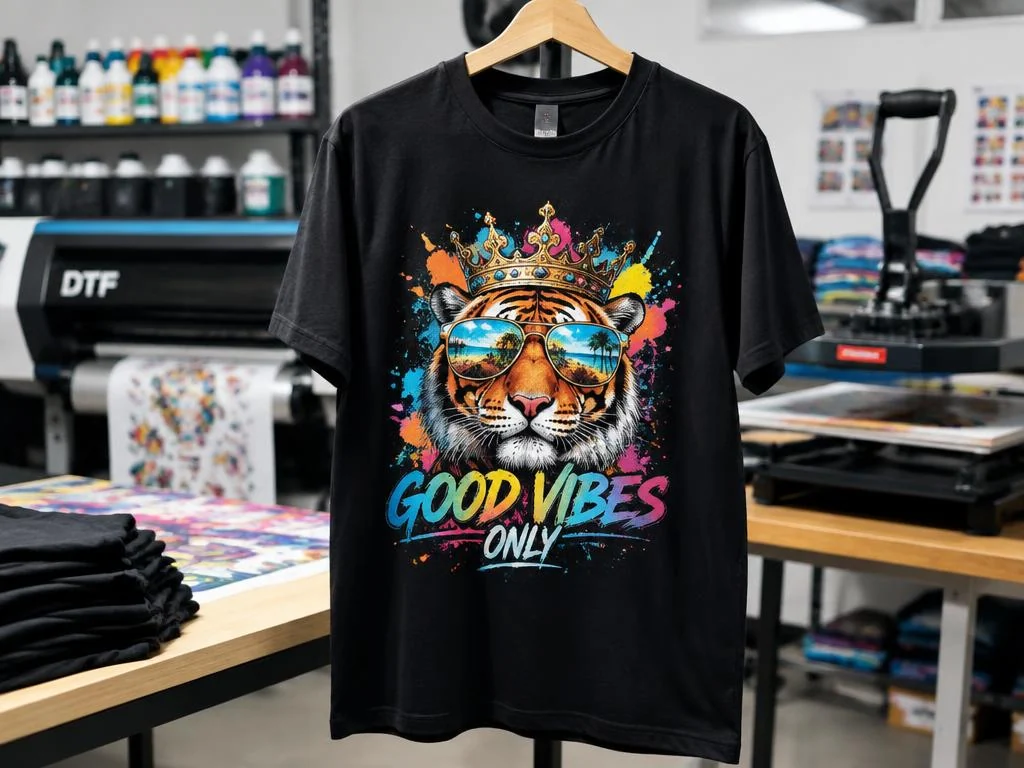
What is the difference between DTF and sublimation?
The main difference between DTF and sublimation is the fabrics each technology supports. DTF prints the artwork onto a PET film that is transferred to fabrics such as cotton and polyester, including dark garments, because the print includes a white layer. Sublimation transfers ink via heat from paper and is suitable for polyester and sublimation-ready surfaces, generally light-colored.
When to choose DTF: if your catalog includes cotton t-shirts, colored or dark garments, and varied orders, DTF provides greater flexibility. The process uses film, adhesive powder, curing, and a heat press.
When to choose sublimation: if you work with polyester sports jerseys, light-colored garments, or sublimation-ready blanks, sublimation is the standard technology for this type of product.
Production and media cost in DTF: PRIME DTF Têxtil 30X uses 2 Epson i1600 printheads and outputs 6 m²/h; PRIME DTF Têxtil 60X uses 2 Epson i3200 printheads and outputs 10 m²/h. According to TEKNOVA datasheets, one linear meter of film costs R$ 7.57 at 30 cm width and R$ 15.14 at 60 cm width.
Many print shops work with both technologies to cater to a broader range of orders. Before deciding, list the fabrics and colors you sell the most and confirm compatibility with the TEKNOVA technical team.