
Content
What is the difference between UV and eco-solvent printing
The core difference lies in how the ink dries: ultraviolet light curing in UV and solvent evaporation in eco-solvent.
Published on
What is the difference between UV and eco-solvent printing?
In UV printing, ink is instantly cured by ultraviolet lamps as soon as it is deposited. This allows printing on non-absorbent surfaces and frees the piece for handling immediately after printing.
In eco-solvent printing, ink dries through solvent evaporation and penetrates receptive materials like vinyl and banner material. It is the traditional process for roll-to-roll visual communication, generally with a lower operational cost per meter in large runs.
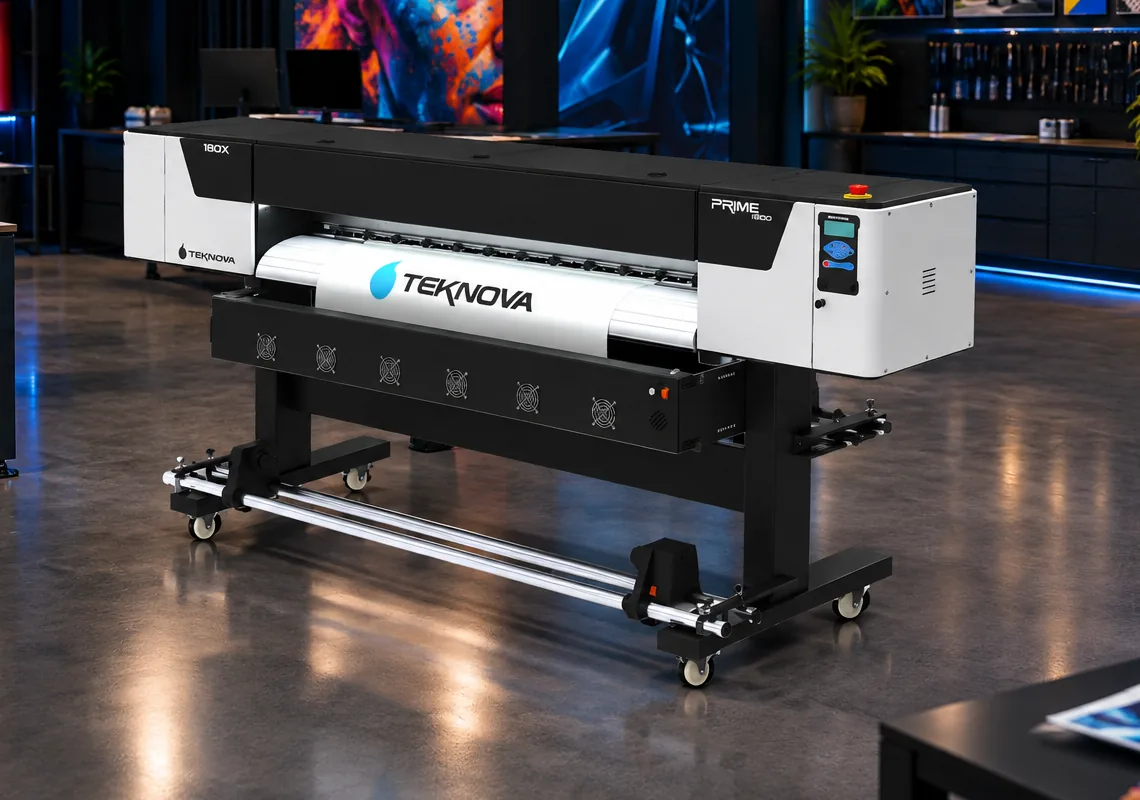
Another key difference is the equipment format. UV printers come in flatbed versions, with a flat table for rigid materials, and roll-to-roll for rolls. Eco-solvent printers typically work in roll-to-roll format.
There is no absolutely superior technology: the choice depends on the material, the final product, and the business model. An operation focused on signs and rigid items tends to benefit from UV; an operation focused on roll-to-roll stickers and banners benefits from eco-solvent.